


“The greatest trick the Devil ever pulled was convincing the world he didn’t exist.”
— Verbal Kint, The Usual Suspects
🎧 Prefer to listen?
This post is also available in audio, narrated by the author, C.K. Redlinger.
We like to think we’d see it coming.
The danger. The deviance. The predator.
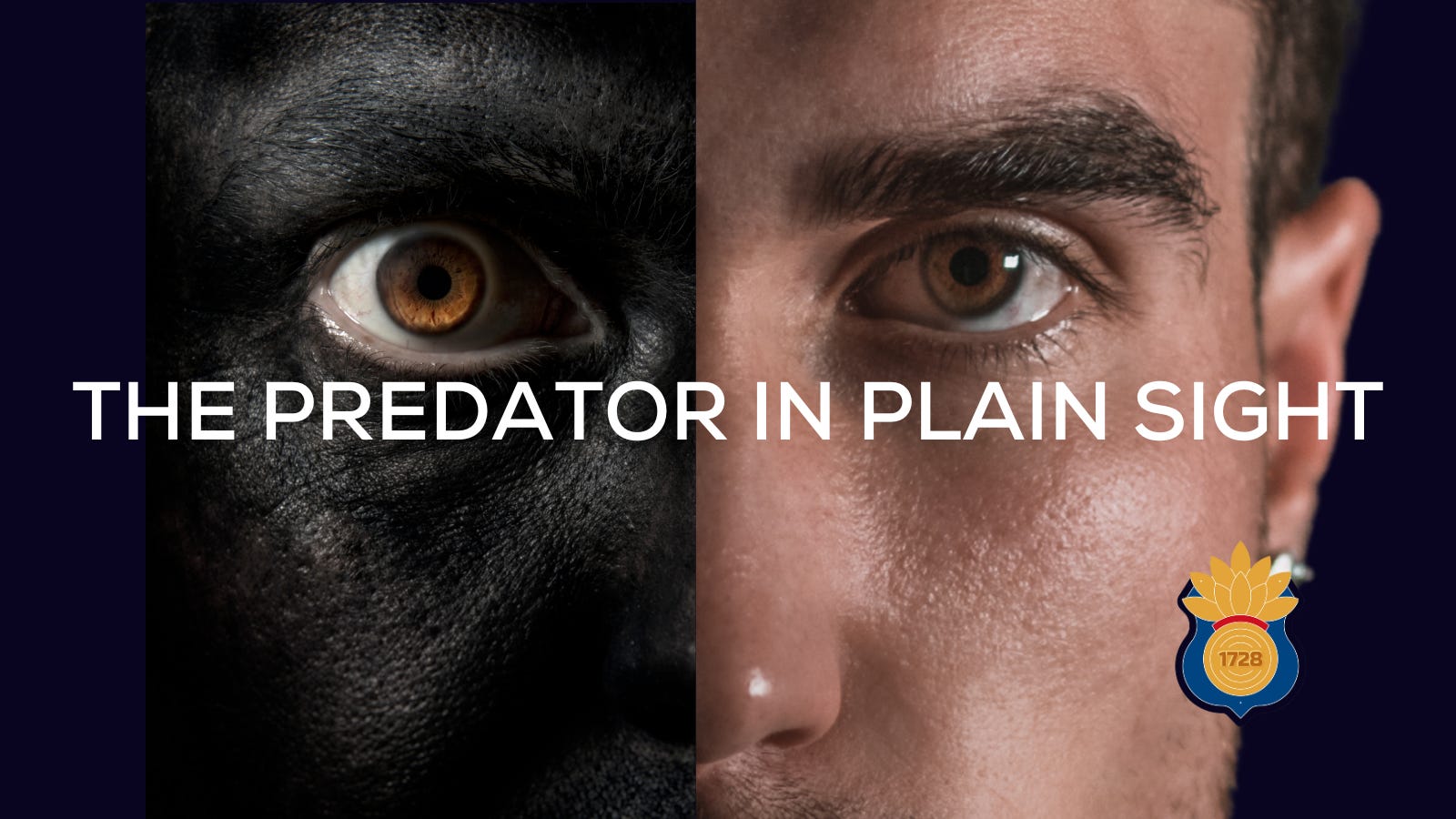
But more often than not, it doesn’t come howling from the shadows. It comes politely. It comes prepared. It comes wearing a mask.
Predators are not just lurking strangers in dark alleys. Some wear tailored suits, speak in measured tones, and know exactly how to make you feel seen. Trusted. Safe. They are practiced, patient, and precise. Their weapon isn’t a knife—it’s attention. Compliments. Common ground. And slowly, they draw you in.
Because predators—especially the human ones—study their prey.
I learned it in homicide, where monsters wore wedding rings.
I learned it overseas, where flags masked ambition.
And I learned it the hard way—where belief gets people killed.
We tend to think of evil as loud. Obvious. Bloody. But the most dangerous people I’ve encountered weren’t the ones who looked the part. They were the ones who didn’t.
The dotting supervisor. The intoxicating partner. The charismatic politician.
The woman who always knew just the right thing to say.
They wear masks so perfect you’ll second-guess yourself when it slips.
And that’s the point.
“The saddest thing about betrayal is that it never comes from your enemies.”
— Unknown
Because for the predator, the real conquest isn’t just the act—it’s the belief they install in you that it couldn’t possibly be true. That you misread it. That you are the one who’s confused.
It’s a form of psychological warfare.
Gaslighting by design.
In training, we study behavioral markers:
Over-personalization
Boundary testing
Guilt as a control lever
Isolation from outside perspectives
But in real life, those markers can be hard to spot—especially when the predator wears a face you want to believe.
This isn’t just about serial offenders or abusers. This is about how manipulation feels before it becomes visible. It’s the slow erosion of instinct. The second-guessing of your gut. The rationalizing of discomfort.
So how do we protect ourselves from something designed to look like safety?
Start by listening to your body before your brain explains it away. Unease is data.
Notice the people who move too fast into your confidence.
Watch for triangulation—when someone constantly pits others against each other, or isolates you from support.
Look for inconsistencies—small lies, stories that shift, praise that quickly turns to punishment.
I’ve seen entire families destroyed because no one believed the mask could be false.
I’ve watched institutions protect predators rather than admit they’d been fooled.
And I’ve buried victims whose only mistake was trusting the wrong smile.
Not every charming person is a predator.
But most predators in plain sight start by being charming.
The danger is rarely out there in the darkness.
More often than not, it’s already in the room.
And it’s already watching you.
—C.K. Redlinger
From the Black Files | Life Held Hostage